#AlbumReview: Erang – Medieval Noir
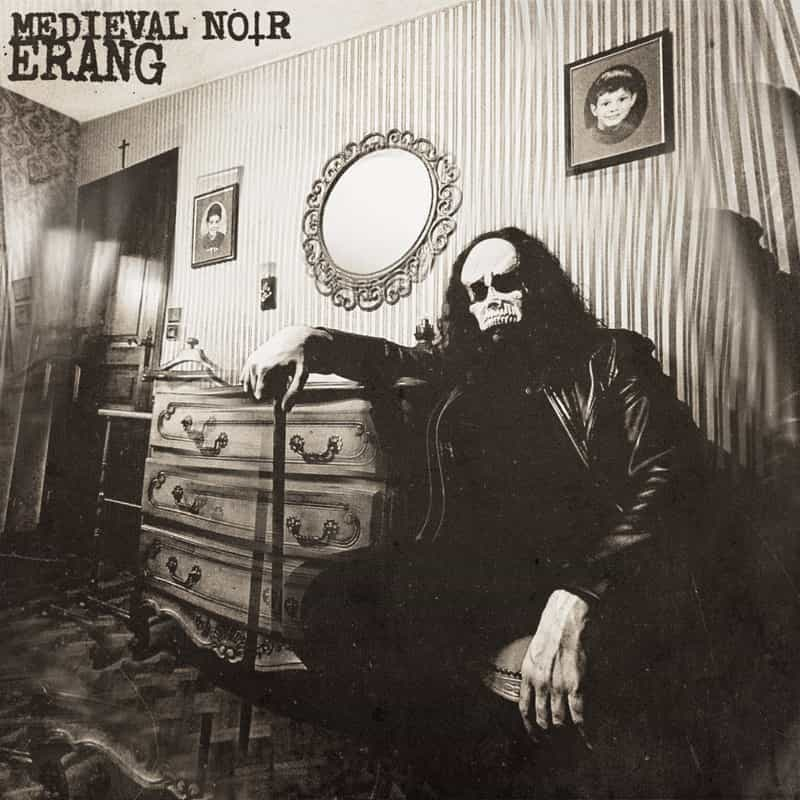
Artist: Erang
Album: Medieval Noir
Label: Independent
Release date: October 16th, 2026
Country: France
Format reviewed: High-Quality Digital Recording
#AlbumReview: Erang – Medieval Noir by Ioana
Erang is one of the most prolific, as well as one of the most influential projects in modern dungeon synth, a testament to the artist’s personal dedication to this music genre. Known for its themes centered around the fantastical realm known as The Land of the Five Seasons, albums such as “King of Nothing, Slave to No One” and the “Tome” series, showcase the landscape and the stories of this land. However, Erang’s latest work, and the subject of this review, Medieval Noir, is a fundamentally different, but principle-wise, consistent album. Dedicated to the work of famed director David Lynch, the album presents itself as a somber and melancholic, but rebellious meditation on the current state of the world, which is presented as a contemporary dark age (hence the title Medieval Noir). The themes of the album are centered on social decay and the descent into authoritarianism, represented most notably in the song titles “The Death of Democratia”, “Neo-Feudalism” and, more subtly “Reality Was a Memory” and references to the rise of AI on tracks such as “Her Digital Castle”. However, one will also find hope, and defiance of the human spirit in songs like “I Will Never Apologise For What I am” and “A Giant Skeleton Arises to Kill the Fake Emperor”. The Land of the Five Seasons isn’t completely gone, though, but it becomes more a point of refuge, the “Five Seasons Bunker Hotel”, where one can stop for a moment of peace in this bleak reality.
Musically, the album isn’t very far removed from what one would typically expect of an Erang album, that being a multitude of layers of synth woven together to create an immersive, epic yet gentle soundscape which invites daydreaming and reflection. However, given the change in themes, the music follows suit. The synth effects are sharper, colder, minor melodies dominate and dissonance is employed more often than not. To my ears, it perfectly captures that sensation we’ve all experienced by now in a way or another, of waking up every day to terrible news upon terrible news, and trying to not completely lose hope in the future and in humanity as a whole. “Reality was a Memory” is the song that hit closest to home in this way. With its use of detuned, video-game-esque synths that seem to disintegrate into bleak, harsh ambient as the song progresses, it truly encapsulates the feeling of hopelessness and numbness I was describing earlier.
There is a very real exhaustion permeating this album, a very human exhaustion, which, nowadays, has become a common experience for the majority of people. At the core of it, I incline to think that Medieval Noiris meant to work as an outlet for all these negative emotions, to exist as a shared musical experience for all of us in this world, as well as to offer some hope for a better tomorrow. This is, once again, reflected in the music through the same dissonance which, for the better part of the album, is used to depict hopelessness. Despite the detuned notes and disharmony, the melody is still there, still audible, underneath all the darkness. My favourite example of this is “Infinita Tristeza (The Lonely Madman Blues)”, which comes off as a more pure hearted version of what one may hear on a Borhen & Der Club of Gore album, but one would have to listen to the song, in order to understand what I’m talking about.
All in all, Medieval Noiris an unique and well thought out piece of music, coming from a place of both great awareness of the world as well as humanity as a whole, and with a message more people ought to sit with. 9/10
Band
Instagram
Merch
Bandcamp
Spotify
9/10 Epic Storm
**Please support the underground! It’s vital to the future of our genre**
#WeAreBlessedAltarZine
#TheZineSupportingTheUnderground