#AlbumReview: Nam-Khar – Antimon
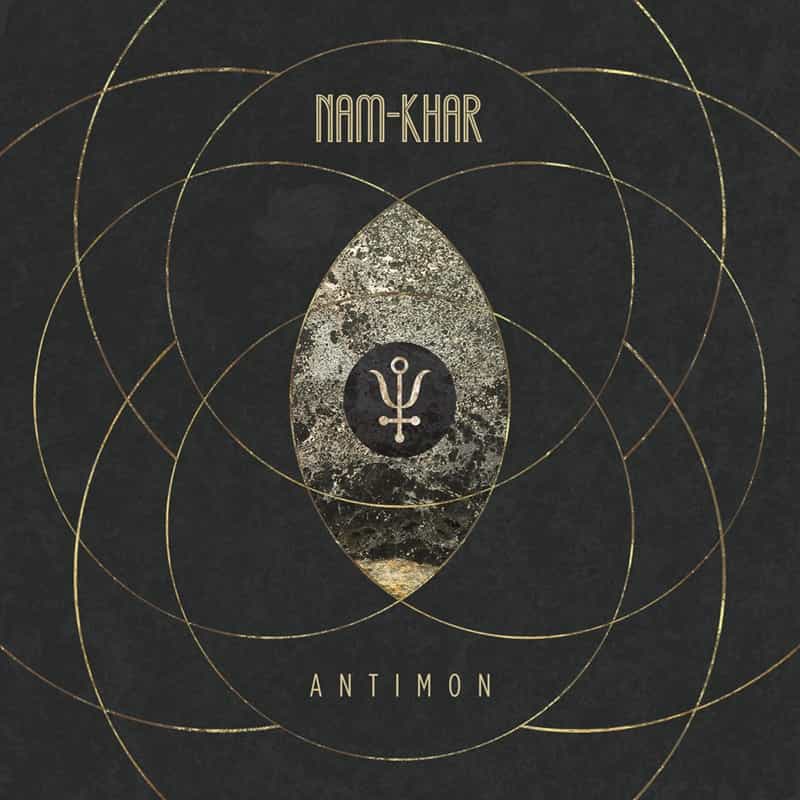
Artist: Nam-Khar
Title: Antimon
Label: Cyclic Law & Zazen Sounds
Release date: July 20th, 2026
Country: Germany
Format reviewed: High-Quality Digital Recording
#AlbumReview: Nam-Khar – Antimon via Cyclic Law & Zazen Sounds by Pegah
“One doesn’t become enlightened by imagining figures of light, but by making the darkness conscious“. C.G. Jung
In the depths of our subconscious lie our shadows. Hidden within that darkness are the forgotten layers of our psyche, where one is ultimately confronted with the truest version of oneself. According to Carl Gustav Jung, human beings initially identify with the ego, while a significant part of the psyche remains hidden within the unconscious. Through the process of individuation, one gradually explores these hidden layers, embraces the neglected aspects of the self, and ultimately moves toward inner wholeness. “Antimon”, the latest release by Nam-Khar, unfolds as such a journey of transformation. Its title, referring to the alchemical element antimony (Sb), symbolizes the transformation of the psyche through the Jungian process of individuation, culminating in psychological wholeness.
The first four tracks of the album are named after colors based on Latin alchemical terminology and will be analyzed individually in the following sections. It is worth noting, however, that in the Illuminationist philosophy of the Iranian philosopher and mystic Shihab al-Din Yahya Suhrawardi, colors likewise symbolize different degrees of light and consciousness. As the symbolism of light and color in Illuminationist thought closely resonates with the album’s central theme of inner transformation, I have chosen to incorporate this philosophical perspective into the present review as a comparative interpretive framework.
“Melanosis” marks the descent into darkness, symbolizing the dissolution of the ego and the inevitable confrontation with the Shadow. From the perspective of Suhrawardi’s Illuminationist philosophy—as later interpreted by Henry Corbin—the initial darkness (ẓulmat)is not merely the absence of light (nūr), but the necessary condition from which illumination begins. The soundscape in this track embodies this psychological abyss through a blackened atmosphere, cavernous drones, and vast sonic spaces that evoke the silence of the void. “Leukosis” represents the beginning of the psyche’s purification and the first emergence of light. Even within the soundscape, one can perceive the initial rays of illumination gradually breaking through the surrounding darkness. From Suhrawardi’s point of view, this moment marks the seeker’s first encounter with higher degrees of light and consciousness.
“Xanthosis”, the yellow stage of the alchemical process, embodies the growing presence of light and marks a significant advance on the path toward individuation and psychological wholeness. Its soundscape radiates warmth and serenity, evoking the feeling of having crossed a decisive threshold, where the ego’s burden gradually gives way to a profound sense of freedom and surrender to the light. From the perspective of Suhrawardi’s philosophy, yellow may likewise be understood as an intermediate degree of illumination, reflecting the seeker’s gradual ascent toward higher states of consciousness before the ultimate realization of light.
“Iosis”, corresponding to the alchemical stage of Rubedo, represents the culmination of this transformative journey. Its soundscape captures this moment through expansive drones and evolving sonic textures, conveying a profound inner metamorphosis. In Jungian psychology, this stage symbolizes the completion of individuation, where the fragmented aspects of the psyche are integrated into a unified whole. According to Suhrawardi, this stage recalls the realization of higher illumination, where the seeker’s consciousness reaches its closest union with the Light. “Coniunctio” explores the union of opposites, where light and darkness, being and non-being, consciousness and the unconscious cease to exist as irreconcilable forces and instead reveal their essential unity. This dialogue between opposites recalls both Jung’s process of individuation and Suhrawardi’s Illuminationist vision, in which darkness acquires meaning through its relationship with light. The soundscape beautifully reflects this harmony: even as the listener is embraced by darkness, light gradually permeates the entire atmosphere, allowing both forces to coexist in a state of profound balance.
In historical alchemy, the “Lapis Philosophorum” is the legendary substance capable of transmuting base metals into gold, producing the Elixir of Life, and symbolizing the completion of the Magnum Opus (Great Work). For Jung, the Philosopher’s Stone is the symbol of the Self. It represents: the completion of individuation, reconciliation of opposites, and psychological wholeness. Although Suhrawardi does not speak of a Philosopher’s Stone, the symbolism may be read alongside his concept of illumination as the realization of perfected knowledge and the soul’s ascent toward the Light of Lights (Nūr al-Anwār).
This stage serves as the threshold to the album’s final chapter, the creation of the “Elixir”. The soundscape evokes a continuous sense of movement, as though a long transformative process is approaching its completion. Rather than expressing closure alone, it conveys the birth of something entirely new—a perfected state emerging from the integration of everything that came before. 9/10
Band
Instagram
Facebook – Band
Facebook – Personal
Label
Cyclic Law
Website
Instagram
Twitter
Facebook
BandRitaulcamp
YouTube
Soundcloud
Label
Zazen Sounds
Bandcamp
Instagram
Facebook
YouTube
9/10 Epic Storm
**Please support the underground! It’s vital to the future of our genre**
#WeAreBlessedAltarZine
#TheZineSupportingTheUnderground