#AlbumReview: Dymna Lotva – Vyraj
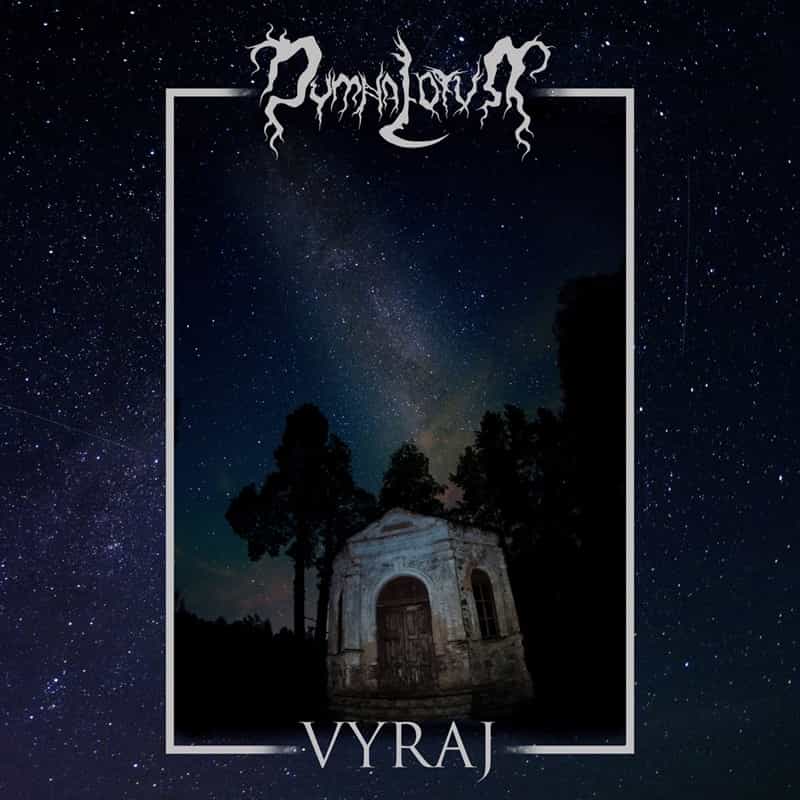
Band: Dymna Lotva
Album: Vyraj
Label: Prophecy Productions
Release date: August 07th, 2026
Country: Poland/ Belarus (early)
Format reviewed: High Quality Digital Recording
#AlbumReview: Dymna Lotva – Vyraj via Prophecy Productions by Ioana
Dymna Lotva is one of the few bands I ended up falling in love with at first listen. Upon the announcement of their inclusion in the lineup of 2025’s edition of Underground for the Masses festival, I decided to check them out and… let’s just say I’ve since seen them twice, listened to all their releases multiple times, etc. And for good reason. Beyond their music being incredible, their artistry as a whole is top notch and they also turned out to be great, inspiring people. Long story short, I hold them in very high regard and many of their songs have a truly special place in my heart. That being said, when they announced they would be releasing their latest album, Vyraj, an epic centered on themes of death, the afterlife and longing, all viewed through the lens of Slavic folklore, I was intrigued, excited, and, well… scared. That may be quite a dramatic word to describe what one may call music anxiety, but it is worth bringing up in this context (one knows the review will end up going on 5 different tangents when it begins with a fable…).
To stay on track though, the albums that made Dymna Lotva such an important band for me are , of course, their 2023 opus Зямля Пад Чорнымі Крыламі: Кроў (The Land Under The Black Wings: Blood) and my personal favourite, Палын (Wormwood) (these two left me speechless in more than one way). So, inevitably, my first thought upon the announcement of Vyraj was: “Ok so how am I supposed to prepare for this album given those two exist”? My anxiety was certainly not dwindled when the band announced they were incorporating new elements into their sound, which is strange, considering I am typically fond of innovation, especially in the case of bands that blend multiple genres (this is what I get for still not being over “P.S. Пахаванне Зямлі (P.S. Funeral of the Ground)”).
All of this aside, I will start off by stating that Vyraj is a great album. There’s no doubt there. Stress aside, it left a striking impression on me, and has mostly been living rent free in my head since I first listened to it, which happened during an afternoon painting session, of all occasions. And when you end up humming a song you heard for the first time while trying to save two layers of oil paint from going doomsday on the canvas, you know the music did something really right. This is also the part where I mention that this album is a whole different beast when you listen to it front to back as opposed to when you listen to the tracks randomly. I will simply state it is the kind of album you sit with, and leave it at that.
The musical elements by which Vyraj stands out when compared to its predecessors are manifold, the one that I noticed first being the open-ness of the soundscape and the celestial mood attached to it. This is not at all surprising when considering the themes of the album but, when placed against, let’s say Зямля Пад Чорнымі Крыламі: Кроў (The Land Under The Black Wings: Blood), which has a dreary, visceral atmosphere that at times seems to drag the listener down, Vyraj almost completely devoid of that weight. It is still dark, still doomy, but it is not placed into the mud and shrapnel of its forebearer. This is made very clear by the opening track, “Zory”, which makes use of bright, yet airy sounding synths in order to convey an otherworldy, starry night-like feeling, with a ghostly edge. “Return My Coffin Home” stands out through the inclusion of folk instruments, most notably the flute, but this has become a trademark of the band by this point. Another interesting example of synth work is found in “The Boat of Despair”, and the only way I can describe it is by bringing up Darkthrone’s “The Lost Arcane City of Uppakra” from their Eternal Hails!… album. Note to all readers, after listening to the full album, play these two songs back to back, and you will probably get what I am referring to. It’s an… “alien” type of synth, and it surprised me quite a bit when hearing it in the song. The band also reaches close to the realms of gothic metal on the same track, by bringing along Aaron Stainthorpe in one of the most potent collaborations I have heard in a while. The same can be said about the contributions of Ingvarr of the German band Schreigarm.
Vyraj doesn’t stand out only through its inclusions and collaborations, whatever. As it has always been the case, Dymna Lotva have always been one of the bands to push their songwriting structures in many different directions. This resulted in one of the most unique songs on the whole album “Veha”, which stands out through its minimalist riffing that seems to become more and more tense up unti the last part of the song, where it flows into this string-like synth arrangement, with faint, ghostly notes played throughout. The lines “Ciabie niama, /Mianie niama./ Tabie turma,/ A mnie – truna.” (You are gone,/ And I am gone. /Prison – for you, /Coffin – for me.) repeat throughout the track in an almost incantatory manner, with the rest of the lyrics branching out from these lines.
However, the most interesting part of this record is, in my opinion, the conceptual side. Tracks such as “Bu Samoje”, which is written in the artificial language Balbuta, created by Belarusian author Aĺhierd Bacharevič for his novel “Dogs of Europe”. The book was, however, banned in Belarus after being declared “extremist” by the Lukashenko regime, a fate faced also by the band’s music. Frontwoman Katsiaryna “Nokt Aeon” Mankevich, however shared her thoughts on the matter in an interview for Metal Hammer: <<“We feel like we’re in good company!” Nokt says with an impish grin and flash of the Devil horns, despite the ordeal she’s been through. “You just need to go through that list if you want to find new bands and new books.” >>. (The interview itself is incredible, for those interested in learning more about the band, it is a great place to start, as far as I can tell). Belarusian folklore, however, remains the central conceptual point of the album, described as “Belarusian ethno-astronomy”, since “Vyraj” represents the mythical place where the dead find their rest, as well as the place where birds migrate in the winter. Two tracks that stand out in this regard are “Viedźmieragina” and “Niama Darohi” both of which have as their central motif the wolf, an animal deeply associated with the night in Slavic culture. As to the specifics of each song, my short research wasn’t capable of leading me to a complete cultural understanding, so I highly recommend everyone do their own research, rather than going on my speculations and interpretations. “Return My Coffin Home” is much more straightforward. The song includes both an authentic Belarusian spell for blessing journeys taken from the book “Zamovy” (“Spells”) by Aliena Zdasiuk, and quotes from the Ukrainian folk song “Plyve kacha po Tysyni” (“A Duckling Swims in the Tisza”), which became known for its use as the requiem of fallen Ukrainian heroes. If it wasn’t clear enough already, beyond the rich cultural tapestry which makes up the universe of Vyraj, the album reflects the journey of Dymna Lotva as they had to escape the dictatorship in their home country, as well as their hope of returning one day, in times less grim for their homeland. To once again quote Nokt and the Metal Hammer interview: << “Every year we are further away from Belarus,” she admits. “Two years ago, all of us would have said, ‘Yes.’ Now, we’re not so sure. I definitely want, when the regime falls, to stage our own metal festival in Belarus. I want to go home and make something good for the scene there. It would be hard though, because most of the people we love are not in Belarus anymore.” /She pauses. “I have already found a good place for my grave, though. When I die, I’ll be in Belarus.” >>.
For a return on the musical side of things, I have omitted to talk about the instrumentation and vocals themselves (somehow). The only reason I can find as to why is probably the fact that they are great as ever, albeit more experimental in their techniques, as previously stated. And as it is typical, I was completely mesmerized by the vocals, especially the way they are layered across songs. The bass work is also wonderfully creative, to the point where the bass is employed as a second lead instrument (see “Veha”), which is always great to see, as bass is to this day a very underused instrument in such matters (or at least as far as I have heard).
Inbetween the rich musical landscape, and even richer context, it is safe to say that Dymna Lotva have once again delivered a masterpiece and that there is no chance this album is leaving my mind anytime soon. Despite my initial “struggle” getting into it, the moment I started digging deeper, I found myself appreciating it more and more. There is a lot more I could’ve written about this album, but I’ll leave it here for the sake of everyone’s sanity. To anyone who’s gotten here, you know what you have to do next… 10/10
Band
Instagram
Twitter
Facebook
VK
Bandcamp
Youtube
Soundcloud
Deezer
Tidal
Spotify
Label
Website
Instagram
Twitter
Facebook
Bandcamp
YouTube
10/10 Immortal Classic
**Please support the underground! It’s vital to the future of our genre**
#WeAreBlessedAltarZine
#TheZineSupportingTheUnderground